Quick win
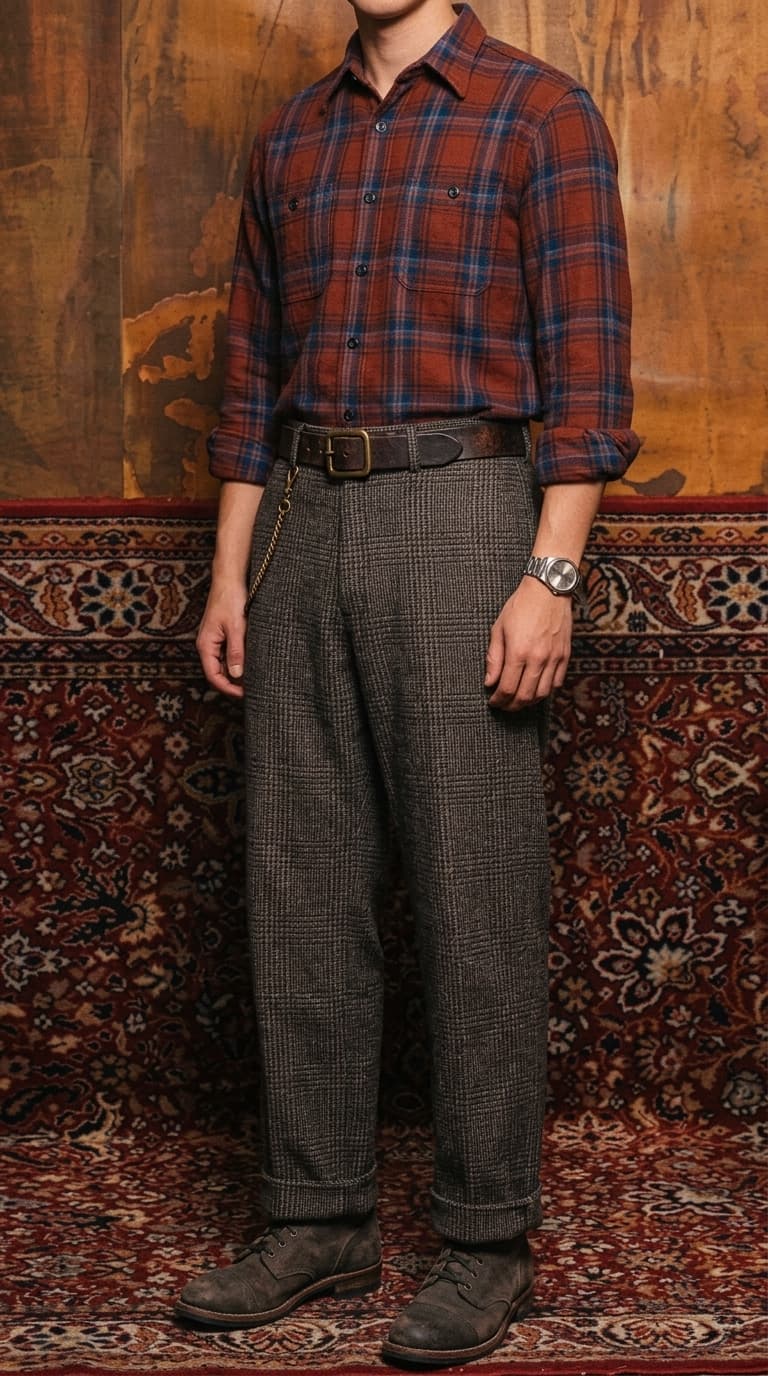
When pairing two patterns, ensure one is dominant and the other is more subdued. In this look, the plaid shirt is the bolder element, while the trousers feature a smaller, more muted pattern that acts as a sophisticated base.
Start here
The combination of a plaid shirt and patterned trousers might sound like a bold move, but when executed thoughtfully, it creates a look that is both classic and contemporary. This outfit formula leverages the visual interest of two distinct patterns to build a cohesive and stylish ensemble. The key lies in balancing the scale and color of the patterns, ensuring they complement rather than clash.
This particular outfit showcases a rich, earthy palette with a warm-toned plaid shirt paired against a subtly patterned grey trouser. The visual weight of the fabrics and the careful coordination of colors demonstrate a nuanced understanding of menswear. It’s an example of how to integrate heritage-inspired pieces into a modern context, proving that traditional patterns can be refreshed for today's style landscape.
1. The Plaid Shirt: Choosing Your Pattern
The plaid shirt is a cornerstone of casual menswear, offering versatility and a touch of rugged charm. For this outfit, a long-sleeved, button-down style in a warm red and blue plaid provides a strong visual anchor. The key to successfully integrating a plaid shirt into a patterned ensemble is to consider its color palette and scale. A shirt with a clear, defined pattern and contrasting colors will naturally draw the eye.
The fit of the plaid shirt is also crucial. A well-fitting shirt, neither too tight nor too loose, will drape better and contribute to a cleaner overall silhouette. Rolling up the sleeves, as seen here, adds a touch of relaxed sophistication and can help to break up the pattern, making it feel less overwhelming. This simple action also allows for a glimpse of the wrist, providing an opportunity to showcase a watch or simply add a subtle.
2. Patterned Trousers: The Foundation
The trousers in this outfit are a masterclass in subtle pattern integration. Featuring a fine glen plaid or houndstooth in shades of grey, they offer a sophisticated alternative to solid-colored pants. The smaller scale of the pattern on the trousers allows the bolder plaid shirt to take center stage without creating a clash. This is a critical principle when combining patterns: one should generally be more prominent than the other.
When selecting patterned trousers to pair with a patterned shirt, consider the fabric weight and texture. Heavier wool blends or tweed-like materials can add depth and warmth, making them suitable for cooler months, while lighter cottons or blends are better for warmer weather. The fit should also be considered; a straight-leg or slightly relaxed fit, as seen here, often works best with patterned trousers to avoid overwhelming the frame.
3. Footwear and Accessories: Completing the Look
The footwear choice is essential for grounding this patterned ensemble. Dark grey suede chukka boots offer a smart-casual finish that complements both the plaid shirt and the patterned trousers without competing. The suede texture adds a subtle richness, and the dark, muted color ensures they don't distract from the main elements of the outfit. The lacing and cap-toe detail provide a touch of classic design.
Accessories play a vital role in tying the look together. A dark leather belt with a substantial buckle, like the one shown, adds a practical and stylish detail at the waist. The subtle chain attached to the belt loop is an unexpected touch that adds a hint of vintage flair. A classic wristwatch with a metal bracelet provides a refined finishing touch.
4. Building Your Patterned Outfit Formula
To replicate this look, start with a plaid shirt that features a distinct color palette. Consider the dominant colors and how they might interact with your chosen trousers. For instance, a blue and green plaid could pair well with charcoal grey trousers or even a subtle windowpane check in a complementary color. The key is to ensure there's a visual link, whether through color or the scale of the pattern.
Once you have your shirt and trousers, select footwear that bridges the gap between casual and smart. Suede chukkas, desert boots, or even clean, dark leather loafers can work well. Avoid overly casual sneakers or formal dress shoes. Accessories should be kept minimal and classic: a leather belt that complements your shoes, a simple watch, and perhaps a subtle pocket square if the occasion calls for it.
5. Avoiding Common Pattern-Mixing Mistakes
One of the most common pitfalls when mixing patterns is choosing pieces that are too similar in scale or color intensity. If both your shirt and trousers feature large, bold patterns in bright, contrasting colors, the outfit can quickly become chaotic and visually jarring. Another mistake is neglecting the overall color harmony. Even with different patterns, the colors should work together. If the colors clash or feel disconnected, the outfit will lack cohesion.
Another error to avoid is over-accessorizing. When you're already working with two distinct patterns, adding too many statement accessories can create visual clutter. Stick to classic, understated pieces that complement the main garments. Fit is also paramount; ill-fitting garments, regardless of their pattern, will detract from the overall look. Ensure your shirt fits well through the shoulders and body, and your trousers have a clean drape.
6. When to Wear This Outfit Formula
This plaid shirt and patterned trouser combination is best suited for smart-casual occasions where you want to make a stylish statement without being overly formal. Think weekend brunches, casual Fridays at the office (if the dress code allows), art gallery visits, or even a relaxed dinner date. The key is that the setting should be somewhat relaxed, allowing for a bit more personality in your attire.
It's important to recognize when this outfit might be too much. For highly formal events, business meetings, or situations requiring a strictly traditional dress code, this combination would be inappropriate. Similarly, if you're aiming for a minimalist or very understated look, this pattern-heavy approach might not be the best fit. However, for occasions where you want to showcase a more fashion-forward and thoughtfully assembled outfit, this formula offers a fantastic starting point.
Checklist
- Choose a plaid shirt with a clear color palette and a pattern scale that complements your trousers.
- Select trousers with a smaller, more subdued pattern to balance the boldness of the shirt.
- Ensure the colors in both patterns harmonize to create a cohesive look.
- Opt for footwear like suede chukkas or dark leather loafers that bridge casual and smart styles.
- Keep accessories minimal and classic, focusing on pieces that enhance rather than compete.
- Consider the occasion and ensure the outfit's pattern intensity is appropriate for the setting.