Quick win
Layering different textures within the same color family, like a smooth knit under a textured jacket, adds depth and prevents a monochromatic outfit from appearing flat.
Start here
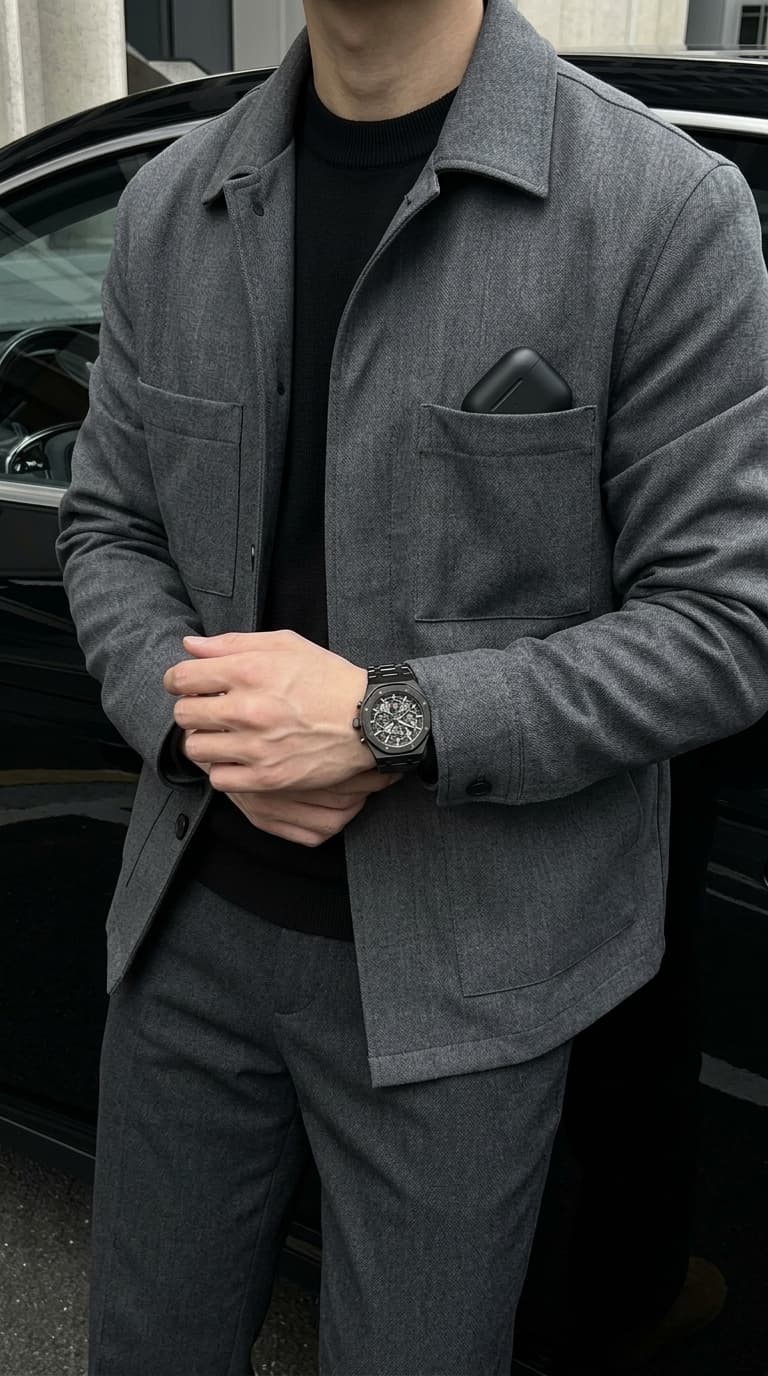
Building a stylish and cohesive outfit doesn't always require a complex understanding of color theory. One of the most effective and straightforward approaches to achieving a polished look is through monochromatic dressing. This technique involves using varying shades and tones of a single color to create depth and visual interest. The outfit in the image showcases a sophisticated take on this style, utilizing a palette of dark greys and black.
The power of a monochromatic outfit lies in its ability to create a seamless visual flow. When all the elements of your outfit share the same color base, the eye moves smoothly from one piece to the next, creating a long, lean, and sophisticated appearance. This is especially true when the outfit is as well-executed as the one pictured, featuring a textured grey jacket, a black turtleneck, and matching grey trousers.
1. The Versatility of Grey and Black for Men
Grey and black form a classic foundation for any man's wardrobe, and their monochromatic pairing is a masterclass in modern style. The outfit features a charcoal grey jacket with a subtle herringbone texture, layered over a sleek black turtleneck. This combination is incredibly versatile, suitable for a range of settings from smart casual office environments to evening events.
The choice of grey and black offers a sophisticated alternative to all-black outfits, which can sometimes appear too severe or somber. The grey jacket, in particular, adds a touch of softness and dimension, making the overall look more approachable yet still undeniably sharp. When building a similar outfit, consider the specific shades of grey available. A medium to dark grey will offer the most versatility, pairing well with black and other shades.
2. Building Your Monochromatic Base Layer
The foundation of any successful monochromatic outfit is the base layer, and in this case, a black turtleneck serves as an excellent choice. A turtleneck offers a clean, unbroken line that complements the structure of an outer layer like a jacket. Its dark color absorbs light, creating a smooth canvas that allows the texture and color of the jacket to stand out.
Beyond the turtleneck, consider other base layer options that fit within the monochromatic theme. A fine-gauge black crewneck sweater can also work, offering a slightly more casual feel while still maintaining the cohesive color scheme. The key is to ensure the base layer is smooth and fits well, acting as a seamless transition to the outer garment.
3. Selecting the Right Outer Layer
The jacket in this monochromatic ensemble is the focal point, providing structure and texture. Its slightly rugged, workwear-inspired design, characterized by its collar and chest pockets, is softened by the choice of fabric and color. The subtle herringbone weave adds a refined detail that elevates it beyond a basic utility jacket. This type of jacket is ideal for smart casual settings, bridging the gap between a formal blazer and a casual bomber.
The color of the outer layer is critical in a monochromatic outfit. Here, the medium-dark grey provides a perfect complement to the black base. If you were to experiment with other monochromatic palettes, ensure the outer layer's shade offers enough contrast or variation to be distinct from the inner layers. For instance, in a navy-based outfit, a lighter navy jacket over a darker navy sweater would work well.
4. Trouser Choices for Monochromatic Outfits
Completing the monochromatic look are the trousers, which in this image are a shade of grey that closely matches the jacket. This creates a unified, suit-like appearance without being a formal suit. The trousers appear to have a clean, straight-leg cut, which contributes to the overall streamlined silhouette. When choosing trousers for a monochromatic outfit, aim for a color that harmonizes with the rest of your ensemble.
The fit of the trousers is paramount in maintaining the polished aesthetic of a monochromatic outfit. A slim or straight-leg cut generally works best, as it avoids overwhelming the frame and keeps the look sharp. Avoid overly baggy or excessively tapered styles unless that is the specific silhouette you are aiming for. The trousers pictured appear to be made from a material with a subtle texture, similar to the jacket, which helps.
5. Accessorizing Your Monochromatic Look
Accessories are where you can subtly inject personality into a monochromatic outfit without breaking the color scheme. The watch worn in the image is a dark, possibly black or gunmetal, piece with a complex dial. Its dark color blends seamlessly with the outfit, acting as a functional piece of jewelry rather than a stark contrast. When choosing accessories for a monochromatic look, stick to colors that are already present in your outfit.
Another subtle accessory is the black earbud case peeking out of the jacket pocket. This small detail adds a touch of modern utility and reinforces the dark color palette. If you choose to add a pocket square, opt for one in a shade of grey or black, perhaps with a subtle pattern that echoes the texture of the jacket.
6. Occasions for Monochromatic Outfits
Monochromatic outfits are incredibly versatile and can be adapted for various occasions. The grey and black ensemble shown is perfect for smart casual settings, such as a business lunch, a gallery opening, or a sophisticated evening out. It conveys a sense of professionalism and attention to detail without being overly formal. The key is the balance of textures and the clean lines of the garments.
Consider the season when planning your monochromatic outfits. Lighter shades of grey, beige, or even white can be excellent for spring and summer, while darker tones like charcoal, navy, and black are ideal for fall and winter. The fabric choice also plays a role; lightweight wools and cottons are suitable for warmer months, while heavier knits and wool blends provide warmth in cooler weather.
Checklist
- Identify a core color and explore its various shades and tones.
- Select garments with different textures to add depth and prevent flatness.
- Ensure your base layer (turtleneck, sweater, or tee) is smooth and fits well.
- Choose trousers that match or complement the jacket's color and texture.
- Accessorize with neutral colors like black, grey, or silver that blend in.
- Consider the occasion and season when selecting fabrics and shades.