Quick win
Ensure your tie's pattern complements, rather than clashes with, the patterns on your blazer and trousers by selecting a tie with colors found in the other garments.
Start here
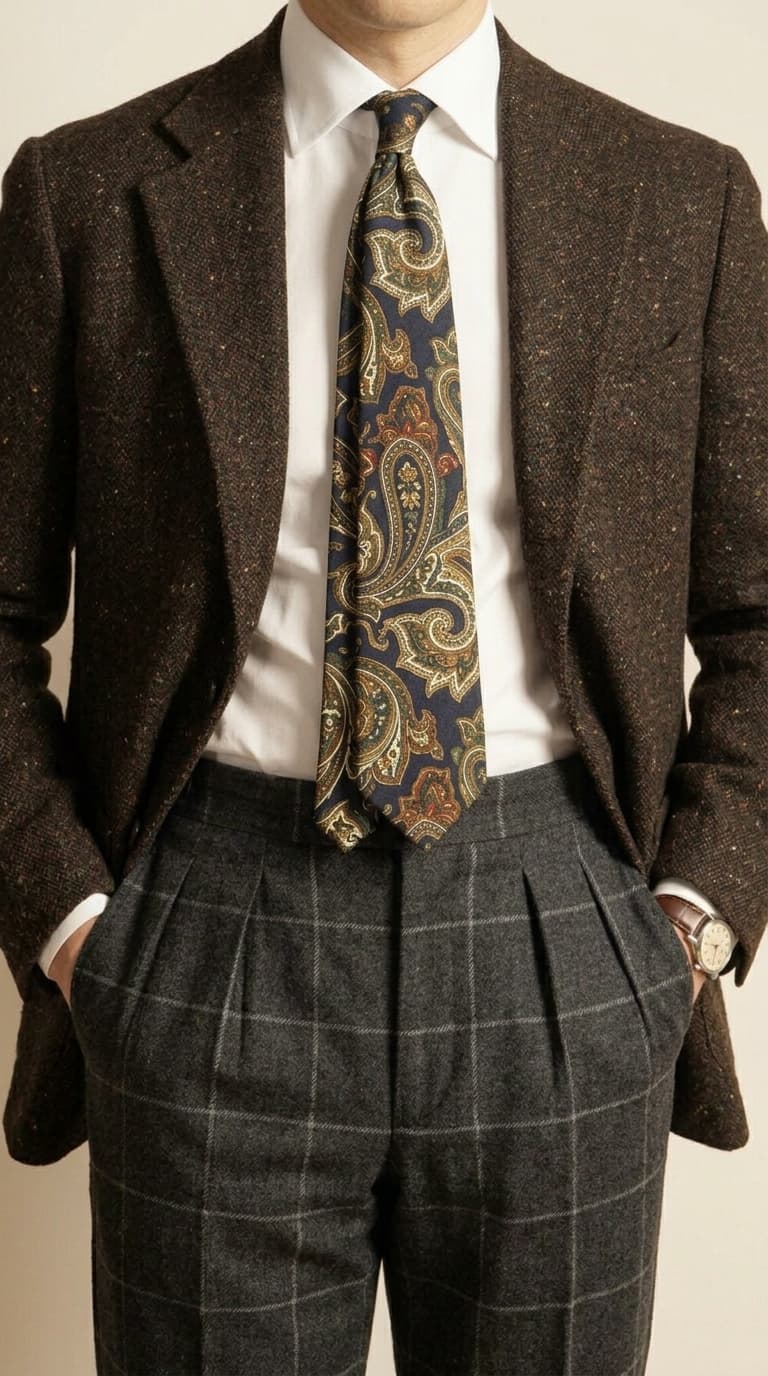
The tweed blazer is a cornerstone of classic menswear, offering texture and a touch of rugged elegance that can elevate any outfit. When paired thoughtfully, it creates a sophisticated look that balances tradition with modern style. This outfit showcases a masterful approach to combining textures and patterns, demonstrating how a well-chosen tweed jacket can anchor a complex ensemble. The key lies in understanding how different elements interact, from the subtle flecks in the blazer's weave to.
Building a stylish outfit around a tweed blazer involves more than just selecting complementary colors; it requires an appreciation for fabric texture and pattern harmony. The image presents a compelling example of this, featuring a rich brown tweed jacket that provides a warm, earthy base. This is contrasted with sharply tailored grey trousers adorned with a distinct plaid pattern, and a tie that introduces a complex paisley motif.
1. The Enduring Appeal of the Tweed Blazer
The tweed blazer, with its characteristic textured weave, offers a depth and character that few other garments can match. Its origins in the Scottish Highlands lend it an air of heritage and ruggedness, making it a versatile piece that bridges the gap between formal and casual wear. The subtle flecks and variations in color within the tweed fabric add visual interest, providing a rich backdrop for other elements of an outfit.
A well-fitted tweed blazer is crucial for achieving a polished look. The jacket should sit comfortably on the shoulders, with the sleeves ending at the wrist bone, allowing about a quarter to a half-inch of shirt cuff to show. The length of the blazer should also be considered; it should generally cover the seat of your trousers. When selecting a color, classic options like brown, grey, or olive green offer the most versatility.
2. Decoding the Trousers: Plaid and Pleats
The grey plaid trousers in the image are a masterclass in adding personality and structure to an outfit without overwhelming it. The plaid pattern, a classic menswear motif, is rendered in a subtle yet distinct check that complements the tweed blazer's texture. The presence of pleats, particularly double pleats as seen here, adds a touch of vintage sophistication and provides a more relaxed, comfortable fit through the seat and thighs, tapering gently towards the ankle.
When incorporating plaid trousers into your wardrobe, consider the scale and color of the pattern. Smaller, more subdued checks are generally easier to style and can be worn more frequently, while bolder patterns can make a stronger statement. The key is to ensure the trousers do not compete with other patterned elements in your outfit. In this ensemble, the grey plaid acts as a sophisticated counterpoint to the tweed's texture and the tie's intricate design.
3. The Art of Tie Selection: Pattern and Color Harmony
The paisley tie in this outfit is a crucial element that ties the entire ensemble together. Paisley, with its intricate, swirling patterns, adds a layer of visual richness and complexity. The success of this tie lies in its color palette, which incorporates shades of navy, gold, and rust, echoing the tones found in both the tweed blazer and the grey plaid trousers.
When selecting a tie to pair with a patterned blazer and trousers, aim for a pattern that offers contrast in scale or design. If your jacket and trousers feature prominent patterns, a tie with a smaller, more intricate pattern, or even a solid color with a rich texture, can work well. Conversely, as seen here, a tie with a larger, more complex pattern can be effective if its colors are carefully chosen to harmonize with the.
4. The Foundation: A Crisp White Dress Shirt
A crisp white dress shirt serves as the perfect canvas for the more complex patterns and textures in this outfit. Its simplicity and clean lines provide a necessary visual break, preventing the ensemble from becoming too busy. The white shirt ensures that the focus remains on the interplay between the tweed blazer, the plaid trousers, and the paisley tie. A well-ironed white shirt, with a collar that stands up properly, adds a touch of formality and.
The collar style of the dress shirt also plays a role in the overall aesthetic. A spread collar, as appears to be the case here, is a classic choice that works well with a tie, providing ample space for the knot to sit neatly. The fabric of the shirt should be of good quality, such as a fine cotton or an Oxford weave, which offers a subtle texture of its own.
5. Footwear and Accessories: Completing the Look
While not fully visible, the choice of footwear and accessories is critical in completing this sophisticated ensemble. Given the classic nature of the tweed blazer and plaid trousers, a pair of leather loafers, oxfords, or even a refined chukka boot would be appropriate. The color of the shoes should ideally complement the browns and greys of the outfit, perhaps a dark brown or oxblood.
The overall impression of this outfit is one of considered style and attention to detail. The combination of textures and patterns, anchored by the tweed blazer and elevated by the plaid trousers and paisley tie, demonstrates a confident approach to menswear. It’s an outfit that speaks to an appreciation for classic tailoring and the art of combining different elements to create something unique and memorable.
6. Avoiding Common Pitfalls in Pattern Mixing
One of the most common mistakes when mixing patterns is choosing elements that are too similar in scale or color, leading to a visually chaotic or muddled appearance. For instance, pairing a large-checked blazer with large-checked trousers would likely clash. The key is contrast: use patterns of different sizes and types. Another pitfall is neglecting color harmony; even with contrasting patterns, if the colors don't relate, the outfit can feel disjointed.
Over-accessorizing is another trap to avoid when wearing patterned garments. With a visually rich outfit like this, it's best to keep accessories minimal and classic. A busy tie, a patterned pocket square, and a bold watch can quickly become too much. Stick to one or two key accessories that complement the outfit without adding unnecessary visual noise. For example, a simple watch with a leather strap or a classic silk pocket square in a solid color.
Checklist
- Select a tweed blazer in a versatile color like brown, grey, or olive.
- Choose trousers with a complementary pattern, such as plaid or subtle checks.
- Opt for a tie whose colors harmonize with both the blazer and trousers.
- Ensure your dress shirt is crisp, well-fitted, and provides a clean base.
- Select footwear that matches the formality and color palette of the outfit.
- Keep accessories minimal and classic to avoid overwhelming the look.