Quick win
Ensure your blazer's shoulders fit smoothly and the sleeves end just above your wrist bone, allowing about a quarter to a half-inch of your shirt cuff to show.
Start here
The modern business casual aesthetic strikes a balance between professional polish and everyday comfort. It's about looking put-together without the rigidity of a full suit, making it ideal for a wide range of work environments and smart weekend occasions. This look often hinges on well-chosen separates that can be mixed and matched, offering versatility and personal expression. The key is to select pieces that have a clean silhouette, appropriate texture, and a cohesive color palette.
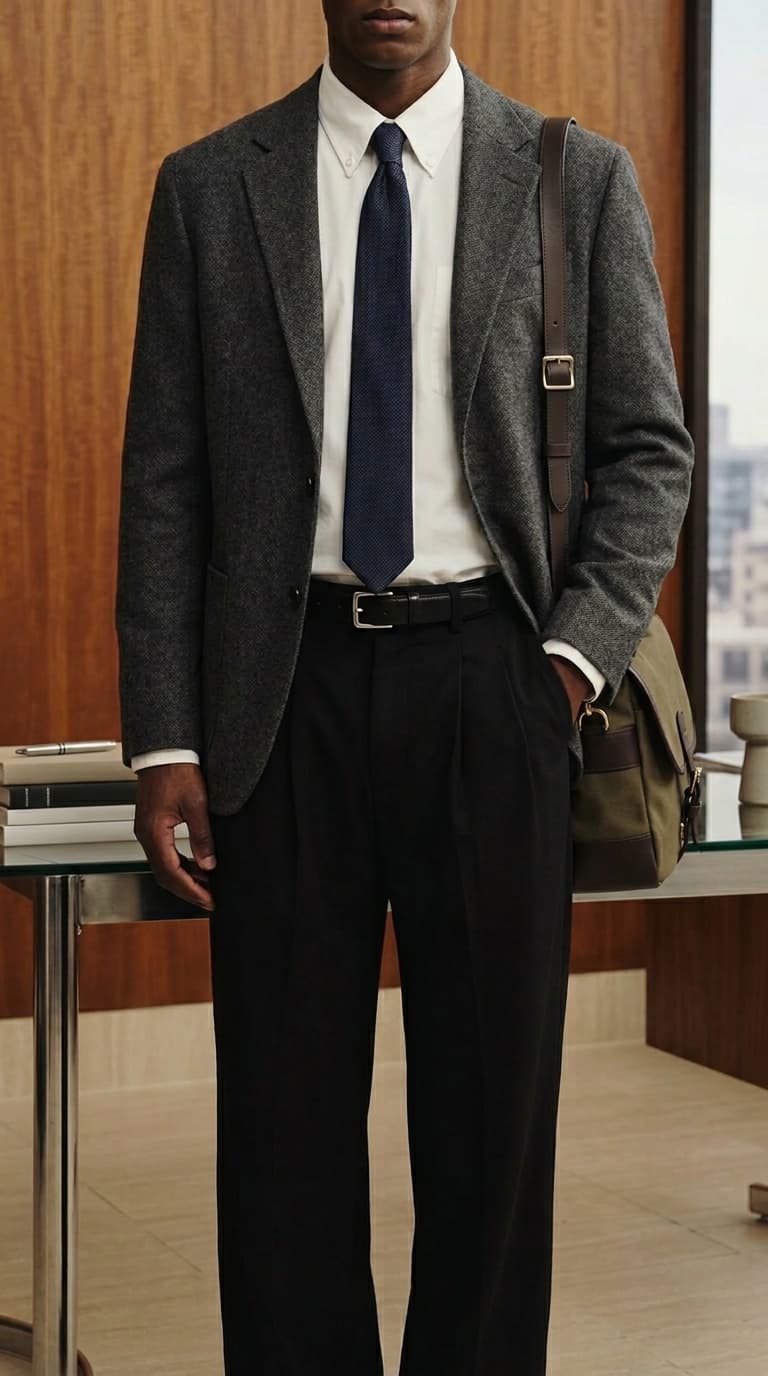
Achieving a successful business casual look involves understanding the nuances of fabric, fit, and layering. It’s not simply about swapping a tie for a polo shirt; it requires a thoughtful approach to each garment. Consider the texture of your blazer, the drape of your trousers, and the subtle details of your shirt and accessories. The outfit in the image exemplifies this approach, showcasing how classic elements can be combined for a contemporary feel.
1. The Versatile Blazer: Your Outfit's Foundation
A well-fitting blazer is the cornerstone of a sharp business casual ensemble. The charcoal blazer in the image offers a sophisticated alternative to a suit jacket, its textured fabric adding visual interest without being overly formal. When selecting a blazer, pay attention to the material; wool blends, tweed, or even a substantial cotton can provide the right amount of structure and warmth.
The choice of blazer fabric significantly impacts the overall feel of the outfit. A textured weave, like the one seen here, adds depth and prevents the look from appearing flat, especially when paired with solid-colored trousers and a shirt. Consider the climate and season when choosing your material. For cooler months, heavier wools or corduroy offer warmth, while lighter wools or linen blends are suitable for warmer weather.
2. The Crisp Shirt: A Canvas for Style
The white button-down shirt is a classic for a reason, serving as a clean and reliable base for any business casual outfit. Its crispness provides a sharp contrast to the textured blazer and dark trousers, ensuring the look remains polished. When choosing a dress shirt, opt for quality fabrics like cotton or a cotton blend that offer breathability and a smooth finish.
Beyond the classic white, consider subtle patterns or different shades of blue and grey for your shirts to add variety to your business casual rotation. A light blue oxford cloth button-down, for instance, offers a slightly more casual texture while maintaining a professional appearance. The key is to ensure the shirt complements, rather than competes with, the other elements of your outfit. A well-pressed shirt with a neat collar is non-negotiable for a polished look.
3. Trousers: Balancing Formality and Comfort
The black pleated trousers in the image are a masterclass in achieving a refined yet comfortable business casual look. Pleats add a touch of classic tailoring and provide extra room for movement, enhancing comfort without sacrificing style. Unlike jeans or overly casual chinos, these trousers offer a more dressed-up foundation. When selecting trousers, consider the fabric – wool, wool blends, or high-quality cotton twill are excellent choices.
The choice between flat-front and pleated trousers often comes down to personal preference and body type. Pleats can be particularly flattering for those seeking a bit more room in the seat and thighs, while also adding a traditional aesthetic. For a slightly more modern take, a subtle single pleat or a more relaxed flat-front style can work. Regardless of the front style, ensure the trousers are well-tailored to your leg length and width.
4. The Tie: Adding a Touch of Personality
The navy tie in the image is a subtle yet effective way to add personality and depth to the business casual outfit. Its textured pattern, likely a knit or a subtle geometric weave, prevents it from looking too formal or overpowering. When choosing a tie for business casual, consider materials like wool, silk blends, or knits, which offer more texture than standard shiny silks.
The knot of your tie also plays a role in the overall aesthetic. A four-in-hand knot is a classic choice that works well with most shirt collars and tie fabrics, offering a slightly asymmetrical and less formal appearance than a full Windsor. Ensure the tie length is correct, hitting the top of your belt buckle. Avoid overly loud patterns or novelty ties, which can detract from the sophisticated balance of a business casual outfit.
5. Accessories: The Finishing Touches
Accessories are crucial for completing a business casual look, adding polish and practicality. The black leather belt with a simple buckle is a classic choice that complements the trousers and shoes. It should match the color of your shoes for a cohesive appearance. The messenger bag, with its canvas and leather construction, adds a touch of ruggedness and functionality, suggesting a man on the go.
Beyond the belt and bag, consider other subtle accessories like a watch. A classic timepiece with a leather or metal strap can add a sophisticated touch. The key is to keep accessories understated and functional. Avoid anything too flashy or distracting. The goal is to enhance the outfit, not to overpower it. A well-chosen accessory demonstrates attention to detail and elevates the entire ensemble, making it feel more complete and intentional.
6. Footwear: Grounding the Outfit
The choice of footwear is critical in defining the formality of a business casual outfit. While not explicitly visible in detail, the outfit suggests a classic leather shoe that complements the professional yet relaxed vibe. Options like leather loafers, derbies, or even clean, minimalist leather sneakers can work. The key is to opt for shoes that are well-maintained and made from quality materials. Avoid athletic sneakers or overly casual sandals.
When selecting shoes for business casual, consider the material and style. Leather is generally preferred for its durability and polished appearance. A plain-toe or cap-toe oxford, a penny loafer, or a chukka boot are all excellent choices. If opting for sneakers, ensure they are made of leather or suede and have a minimalist design. The color should coordinate with your belt and trousers.
Checklist
- Invest in a well-fitting blazer in a versatile color like charcoal or navy.
- Choose dress shirts made from quality fabrics like cotton or oxford cloth.
- Opt for trousers with a clean drape, considering pleats for added comfort and style.
- Select ties with texture or subtle patterns that complement your blazer and shirt.
- Accessorize with a matching leather belt and a functional, stylish bag.
- Ground your outfit with polished leather shoes or minimalist leather sneakers.