Quick win
Swap traditional dress shoes for clean, minimalist leather sneakers to instantly update your business casual look while maintaining a professional edge.
Start here
The modern business casual landscape offers a flexible approach to professional dressing, blending comfort with a polished aesthetic. Gone are the days of rigid suits for every office environment. Today, it's about smart choices that convey competence and personal style without being overly formal. This means understanding the nuances of combining classic pieces with contemporary elements, ensuring your outfit is appropriate for meetings, client interactions, and everyday office wear.
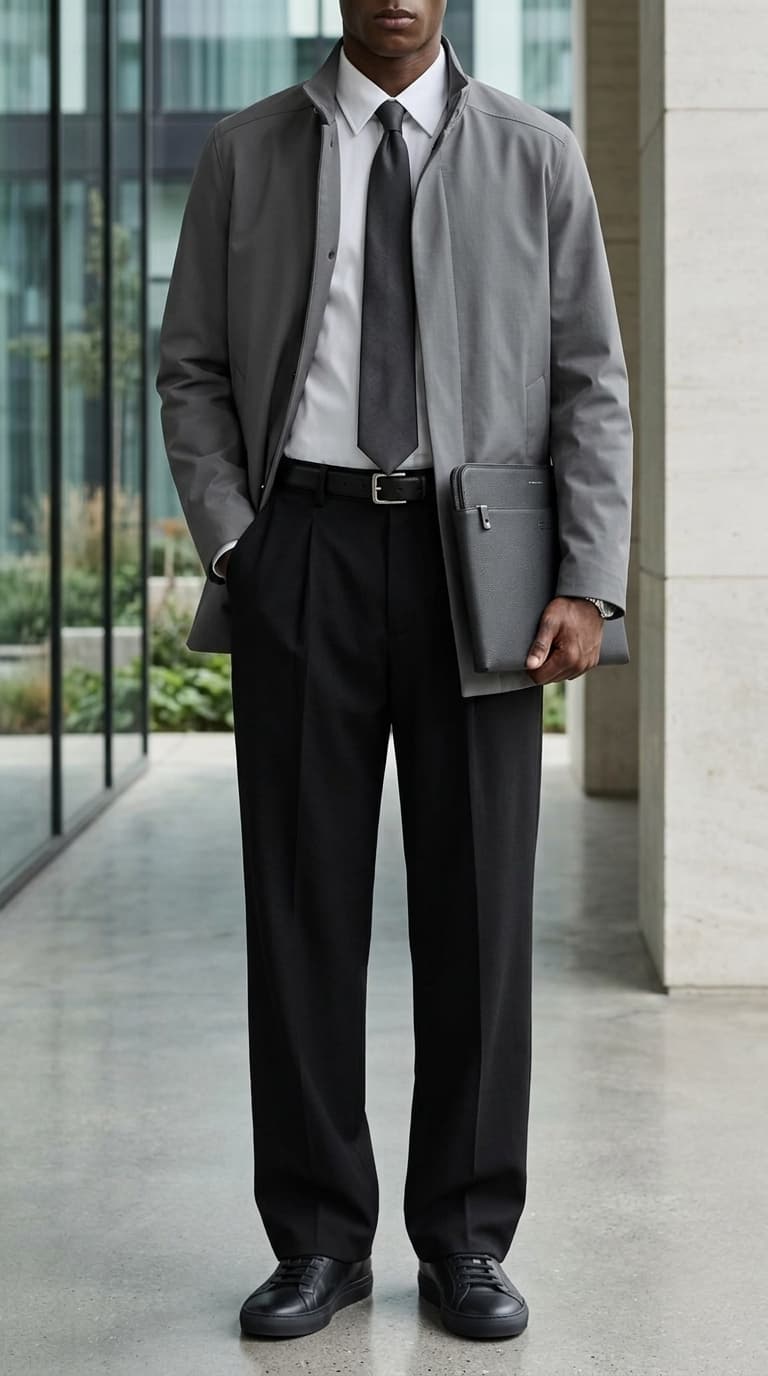
Achieving a successful business casual look hinges on thoughtful selection and intentional pairing of garments. It’s about building a wardrobe of pieces that can be mixed and matched to create a variety of outfits suitable for different professional settings. The image showcases a prime example of this modern approach: a clean, structured outfit that feels professional yet approachable. By understanding the core components of a smart casual ensemble—from the fit of your trousers to the.
1. The Foundation: Smart Trousers and Shirts
The foundation of any sharp business casual outfit lies in the trousers and shirt. The image features well-fitting black trousers with a subtle pleat, offering a clean drape that avoids being too tight or too baggy. This silhouette is crucial for a polished appearance. Opt for trousers in versatile colors like black, charcoal, navy, or even a subtle grey or olive.
When selecting trousers, consider the rise and the leg opening. A mid-rise with a straight or slightly tapered leg offers a timeless and flattering fit for most body types. Pleats can add a touch of classic style and comfort, but ensure they are not overly voluminous. For shirts, the collar style is important; a spread collar or a semi-spread collar works well with a tie or when worn open.
2. Layering with Purpose: The Smart Jacket
Outerwear in business casual is about adding a layer of sophistication and practicality. The grey jacket in the image is a perfect example of a modern layering piece that elevates the entire outfit. It's structured enough to look intentional but relaxed enough to avoid the formality of a suit jacket. Look for jackets with clean lines, a simple collar, and minimal detailing.
The choice of jacket can significantly alter the perceived formality of your outfit. A well-chosen jacket can bridge the gap between a formal shirt and tie and more casual trousers or footwear. Consider the length; a jacket that ends around the hip is generally most versatile. Ensure the sleeves are the correct length, allowing about a quarter to a half-inch of shirt cuff to show.
3. The Tie and Belt: Subtle Details, Big Impact
The tie and belt are often overlooked details that can make or break a business casual outfit. In the featured look, a dark, subtly textured tie is paired with a white shirt, creating a classic and professional contrast. The tie knot should be neat and proportionate to the collar. Avoid overly loud patterns or novelty ties; opt for solid colors, subtle stripes, or understated geometric patterns in materials like silk or a fine wool blend.
The interplay between your belt and shoes is a subtle but important styling cue. Generally, your belt should match the color and finish of your shoes. If you're wearing black shoes, a black belt is the standard choice. For brown shoes, a brown belt is appropriate. The buckle should be relatively understated for business casual settings; a classic rectangular or square buckle is usually best. Avoid overly large or ornate buckles.
4. Footwear: Bridging Formal and Casual
Footwear is where business casual truly shines in its adaptability. The image demonstrates a bold yet effective choice: sleek black leather sneakers. This pairing signals a modern, confident approach, moving away from traditional dress shoes while maintaining a sharp aesthetic. When choosing sneakers for business casual, prioritize clean designs, premium materials like leather or high-quality suede, and a minimalist color palette. Black, white, grey, or navy are excellent choices.
Beyond sneakers, other excellent footwear options for business casual include loafers (penny, bit, or tassel), chukka boots, and clean leather derby shoes. These styles offer a more traditional route to smart dressing but still provide comfort and versatility. Ensure any leather footwear is polished and in good condition. The sole of the shoe also plays a role; a slimmer sole generally looks more refined than a chunky lug sole, though a moderate lug sole can.
5. Accessories: The Finishing Touches
Accessories are the details that personalize an outfit and add a touch of refinement. In this ensemble, the man carries a sleek grey portfolio, which serves both a practical purpose and adds to the overall polished look. A slim leather briefcase, a modern messenger bag, or even a well-designed backpack in a neutral color can serve a similar function. A watch is another essential accessory; a classic timepiece with a leather or metal strap adds.
Beyond the functional items, consider subtle additions that enhance your look. A pocket square, if worn with a blazer or sport coat, can add a pop of color or pattern. However, for this specific jacket style, a pocket square might be unnecessary and could overcomplicate the look. The focus here is on clean lines and intentional choices. Even small details like well-groomed hair and a neat shave contribute to the overall impression of professionalism.
6. Avoiding Common Pitfalls
One of the most common mistakes in business casual is leaning too far into casual territory. This can mean wearing ill-fitting clothes, opting for overly relaxed fabrics like worn-out t-shirts or ripped jeans, or choosing footwear that is too sporty or informal. Another pitfall is over-accessorizing or choosing accessories that clash with the main outfit. Remember, business casual is about striking a balance; it should look intentional and professional, even if it's not a suit.
Another area where men often falter is in understanding the context of their workplace. What's acceptable business casual in a creative agency might be too relaxed for a law firm. Always observe your colleagues and superiors to gauge the prevailing dress code. When in doubt, it's always better to err on the side of being slightly more dressed up. Avoid trends that are too fleeting or garments that feel costume-like.
Checklist
- Invest in well-fitting trousers in neutral colors like black, charcoal, or navy.
- Choose a crisp, well-ironed dress shirt in white or a light solid color.
- Select a smart jacket, such as a bomber or Harrington, in a complementary neutral tone.
- Pair your outfit with clean, minimalist leather sneakers or classic loafers.
- Ensure your belt matches the color and finish of your shoes.
- Keep accessories like watches and bags sleek and understated.